Sunday, September 25, 2011

In Gary I Trust

One of my first casts using a Yamamoto Senko worm.
I have written on here about a few “go-to” lures such as Zoom lizards and Zoom brush hogs.  Both are great lures that have worked very well for me in a variety of local watering holes, farm ponds and rivers.  I stand by my past entries praising them and still have them in my tackle box.  That being said… I have not used either in 2 months and it all started with a little stream magic and a local named Hank.


I still cannot remember his exact name (I am horrible at that) so I’ll call him ‘Hank.’  I was fishing a local hot spot; a medium sized drainage pond in a local Home Depot shopping center and was having no luck with the fish.  After about an hour’s worth of work with only a little nibble I started thinking about bugging out to grab a beer and enjoy the rest of the short weekend.  Before I could turn around and step out of the lake (I was wadding about ten feet from the bank) I noticed someone walking down from the parking lot towards me.

Hank seemed like any other average Joe armed with a spinning rod except he did not have a tackle box with him.  Aside from his keys all he had was a bag of worms sticking out of his pocket.  "OK I thought - this guy just hit the local sporting goods store and got roped into buying a $10 bag of super worms.  Better steer clear as he'll be asking me in about five minutes about all of the tackle I have in my bag and what works." After saying brief hellos Hank made a left and setup about 20 feet down the bank from me fishing right in front of a storm culvert that fed into the lake.  Now I knew this guy was amateur hour as that area was shallow as hell with zero cover and a lot of floating junk from the recent rain storm.

As I turned around and tried a few more casts before bugging out and giving Hank the lake to himself I heard a loud splash.  OK - Hank got lucky with a smalley I thought.  Yah... I was dead wrong.  He just landed a 5 lb large mouth bass, a monster fish for this suburban drainage lake.  Hank caught me staring as he was freeing the hook, smiled and cast again.  BOOM.... another fish.  This one was smaller but around 3 lbs.  OK I thought, no way he can get a hat trick....BOOM.  This guy caught three fish, all over 3 lbs on three casts in an area I covered previously and never caught jack shit.

I couldn't help it - I HAD TO KNOW.  After swallowing my pride I walked over to Hank and asked him what in the world he was using.  This is when I was introduced to Gary Yamamoto... and I haven't fished anything since.

Gary has been a leader in the fishing industry for years.  If you want the full skinny on his incredible story check out his website.  Just Google his name and you'll get thousands of hits including testimonials from fishing pro's how they never compete without his products in the boat.  This guy is the shit and his Senko worm does a day's work.  The 3 inch Senko is what Hank was using the day our paths crossed.  

Back to the story - after talking for about 10 minutes I learned that Hank is a retired pro bass fisherman who now works as a federal contractor.  A few years back on the tour he discovered the Gary Yamamoto Senko worm and he rarley used anything else.  Once he handed me a few plus some of the hooks he used on his particular rig I too agree this lure is the new "go-to" for me.  When fished right it is deadly on fish, all kinds of fish - not just large mouth bass.

Below is a quick timeline of one particular cast when Hank was showing me how he fished the 3" Senko.  According to Hank this particular size and color Senko is THE BEST bass lure for East coast freshwater.  After using it for two months I beleive him.

STEP 1:  Worm selection.  Use the 3" Senko worm in Watermelon Seed (top) or Watermelon Magic (below).  The Watermelon Seed has little black flakes in it while the Watermelon Magic has little black and silver flakes in it.  Both mimic a variety of forage that all fish eat. 

STEP 2: Hook selection.  Hank's recipe calls for a Size 1, G-Lock worm hook from Gamakatsu.  This is the PERFECT size which allows the lure to fall horizontally like wounded prey.  THIS IS KEY!  Do not use anything bigger with the 3" Senko worm.  Believe me - this hook has caught all sizes and its chemically sharpened so be careful with the pointy end as it'll stick real good.
STEP 3: Attach the worm to hook.  I use a Carolina Rig with no weight.  Although you can use split shot weight when casting out from shore I prefer the weightless rig as the worm falls better (a key for fishing this rig).
STEP 4: Presentation.  When presenting a weightless Senko shoot for a zone between the bank and about 10 - 12 feet out (area circled in red above).  It really helps if there is high cover like the trees above as this will help shield the sun and cool the water.  This zone is great.  Above Hank is on his 9th fish in as many casts. 
STEP 4: Presentation (Continued).  When you cast out the worm, as soon as it hits the water have the rod at the 10 o'clock position and let the worm fall naturally (don't work the lure or start the retrieve - just let it fall).  During this initial fall is when a majority of the hits occur.  Having the rod tip at 10 o'clock gives you the best chance to set the hook. 


STEP 4: Presentation (Continued).  After the initial fall if you do not get a strike, gently lift the rod to get the worm off bottom, slowly crank the reel a few turns and let it fall.  Again, you do not want to work the lure, jig it, etc.  It's all about the fall.
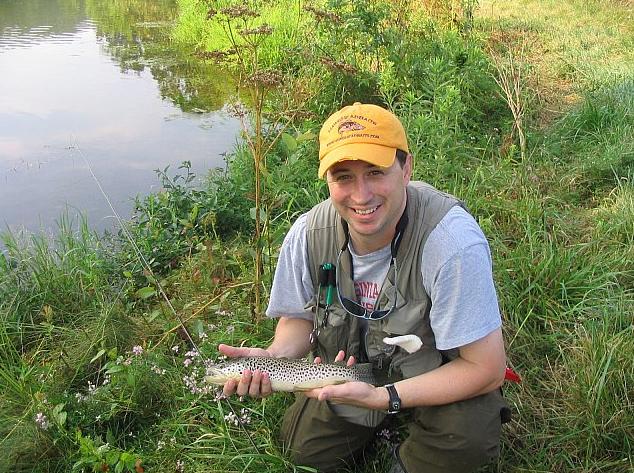
Not bad Hank!  He was working fish this size all day - I've never seen anything like it.
Now it was my turn with the Senko.  After catching 12 fish in 40 minutes I ran out of Senko worms and had to bug out.  That is the one draw back to using these guys.  The plastic component they are made out of is super soft which helps the swim/ fall action in the water.  The problem is that fish tear them up really quickly.  When they hit these things they hit hard - I mean really hard.  Its very easy to go through a pack of 10 in a few hours - even more so when you loan a few out to jealous anglers like me.  If you get a chance, get your self a pack with the hooks described above and see for yourself.  I have steered four people to these lures, all with different fishing skill sets and the results have all been the same - outstanding!

After a brief stop by Dicks Sporting Goods on the way home.  I have gone through about 9 of these packs in the last 2 months. To be fair I have loaned out a few to friends and family.
All sizes of fish love these things.  It is a great lure to use when teaching young kids how to bass fish as the chances they'll catch something is almost a given.
Next cast after catching the baby bass.


Monday, June 20, 2011

Bug Chuck'n on the Susie Q

In honor of Father's Day I'd thought I would post some pics on one of the best gifts my wife ever gave... a guided fishing trip though Mossy Creek Fly Fishing back in 2007.  Before the birth of our daughter my wife surprised me with a gift certificate for a full day guided outing with one of the best outfitters on the East Coast. After arranging the date in late August, the guys at Mossy Creek decided that their private stretch of water on Smith Creek, a one mile stream called "The Susie Q," would offer the best chance for some trout fishing.

Dawn breaks on the Susie Q (photo courtesy of Mossy Creek Fly Fishing)
The Susie Q portion of Smith Creek is a mile long, limestone bottomed stream that is fed by several underground springs.  The water is mostly shallow with several riffles and pools that meanders through local farm pastures.  The underground springs that feed the creek help the Susie Q maintain a constant temperature throughout the year which makes it an ideal trout stream.  The stream is private and fish-able only by appointment through Mossy Creek Fly Fishing (both guided and unguided trips are available).  If you go by yourself there is a $70.00 all day fee per angler.

The management of the stream is overseen by Mossy Creek and local landowners.  It is a gorgeous trout habitat that supports very large brown and rainbow trout.  It lies in the heart of the Northern Shenandoah Valley and is surrounded by farmland so the scenery adds to the whole experience.  There are all kinds of aquatic bug hatches in the warmer months and it is an awesome stream to chuck beetle and grasshopper patterns late in the summer.

The Susie Q lies on Smith Creek about a mile south of Lacey Springs, VA.  To get from DC to the water is about a 2 hour drive. (Photo courtesy of Google Maps)
My guide for the day was Curt, a student at the local college (James Madison University).  If there is such a thing as reincarnation I wanna come back as this guy.  College student by day, fly tying bum after class and trout guide on weekends.  Aside from being an expert fly angler Curt was a very patient and knowledgeable teacher.  I lost more than a fair share of his flies to snags and tree limbs but he was OK with it. I learned a lot through his teaching and we had a blast yucking it up between bites.
My guide Curt showing off a nice rainbow that was parked under a willow tree slurping on beetles.
As for rods Curt provided two for me to use.  One was rigged for top water action with floating 5 wt line, 5x tippet and a black Crowe beetle.  The other was the same rod type and line but was rigged for getting lower in the water column with a slip shot weight and a streamer.  We would actually be trying several flies throughout the course of the day but the Crowe beetle and various streamers like the golden retriever seemed to get the best results.  The water was stained due to an evening rain storm but that only added to the fishing as trout are weary in low water and hot August heat.  A little rain can trigger the feeding as a lot of bugs fall into the water or are dredged from the stream bed.  It can really be hit or miss but fortunately for this trip it was all hits. 

Regarding the the Crowe beetle fly that we used, its a custom pattern developed by the owners and operators of Mossy Creek, Colby and Brian Trow.  These guys grew up in the area and are die hard fisherman.  They have experience going after all kinds of trout plus bass and musky.  These guys are constantly guiding people on great water and are also well known for their custom tied flies.  One of their best bugs, the Crowe beetle, is a trout slayer that also does a number on small mouth bass.  Its made mostly of black deer hair on a black hook.  There are over 200+ beetle species in Virginia alone and they are a major diet for fish, especially trout.  The Crowe beetle is a fat little guy that makes a unique sound when slapped on the water - for fish its like a dinner bell.    These guys never seem to have enough in the store because they sell out so fast.
A brown trout that devoured a Crowe beetle. 
What makes Mossy Creek stand out is that they are very professional but also very laid back.  Some fly shops are good on the water but then try and sell you everything in the shop after you shelled out big bucks for the trip.  These guys stand out by providing excellent guide services but also make everyone welcome in the store.  It truly is a hang out spot for fish-heads and newbies alike.  They even have free open houses throughout the year to show off new gear and raffle away tackle.  During these open houses they welcome folks to hang out around the shop, drink a few cold ones and enjoy local BBQ.  They also give free clinics on fly casting and tying flies.  I attended a tying clinic this past winter on tying flies with deer hair - below is one of the bass flies they showed us how to tie. 
This is a Trow custom frog pattern.  It is made from dyed deer hair that is spun onto the hook and trimmed with a razor.  This bad boy takes a pro several hours to make - amazing!


If you would like to visit the guys at Mossy Creek or book one of the guided trips check out their website and Facebook page.  They also have several You Tube videos on fishing trip highlights and tie flying. 
Mossy Creek Fly Fishing
1790-92 East Market Street
Harrisonburg, VA 22801  
Phone: 540.434.2444
Fax: 540.434.2555
E-mail: store@mossycreekflyfishing.com

As the day was getting warmer so was the bite.
Another nice sized rainbow trout.  The fish on this stream can get about 4 times bigger by the end of the summer.
Yep... is starting to get about 98 degrees with 80 percent humidity at this point.  Gotta love August in VA!
Good release.
A look at Curt's dry fly arsenal.
Trying to be graceful and look cool.... and failing.  Almost fell in trying to net this guy.
A nice rainbow trout.
A pretty bend in the stream.  The foliage on the banks will get to about 4 feet tall by the end of the summer.  Perfect bug habitat for hungry fish.  These guys did a great job turning this farm stream into a trout creek!

Tuesday, June 14, 2011

ROADTRIP ! ! ! !

We were fortunate to be able to stay at a friend of the family's cabin in Timberline Resort in Canaan Valley, West Virginia a few weeks back.  This place has been a favorite summer time destination for several years as it is a major fishing location that gets little to no pressure from other weekend warriors.  What made it an even better trip was the weather.  Three straight days of sunny, 80 degree temps with zero humidity.  I was also fortunate to be able to take my brother and some buddies to enjoy the fishing, local hiking trails and the cabin.

Below are some of the photos from the 2011 Kachung Invitational Fishing Tourney.  It was a close race but I was able to pull out the skills to kick butt... that is until a newbie caught a 10 lb monster bass.  The problem was that he was on the other side of the lake alone with no camera so without tangible proof it doesn't count.  :)  I love making up rules as I go along.

For lures we used Zoom brush hogs and baby brush hogs in watermelon candy and watermelon seed colors using red EWG worms hooks in sizes 2/0 & 3/0.  I like red hooks when using creature baits like the brush hog because I believe it looks like a blood trail.  I tend to get better strikes with them as the fish think the lure is wounded and easy prey.  Rods were all medium spinners with 6lb test monofilament line.  For better presentation we used YUM bait attractant.  This is good when you are using sunscreen as the attractant will help mask any unnatural oils from your fingers that might make its way on the lure when rigging.

Here are the different types of brush hogs we used.  They do not mimic anything specific in nature - they are more of a cross between a lizard, frog and crawfish.  For some reason the fish love them and tore them up so much we almost ran out.
This is the baby brush hog.  Notice the wear and tear - this was my last one out of a pack of 12.
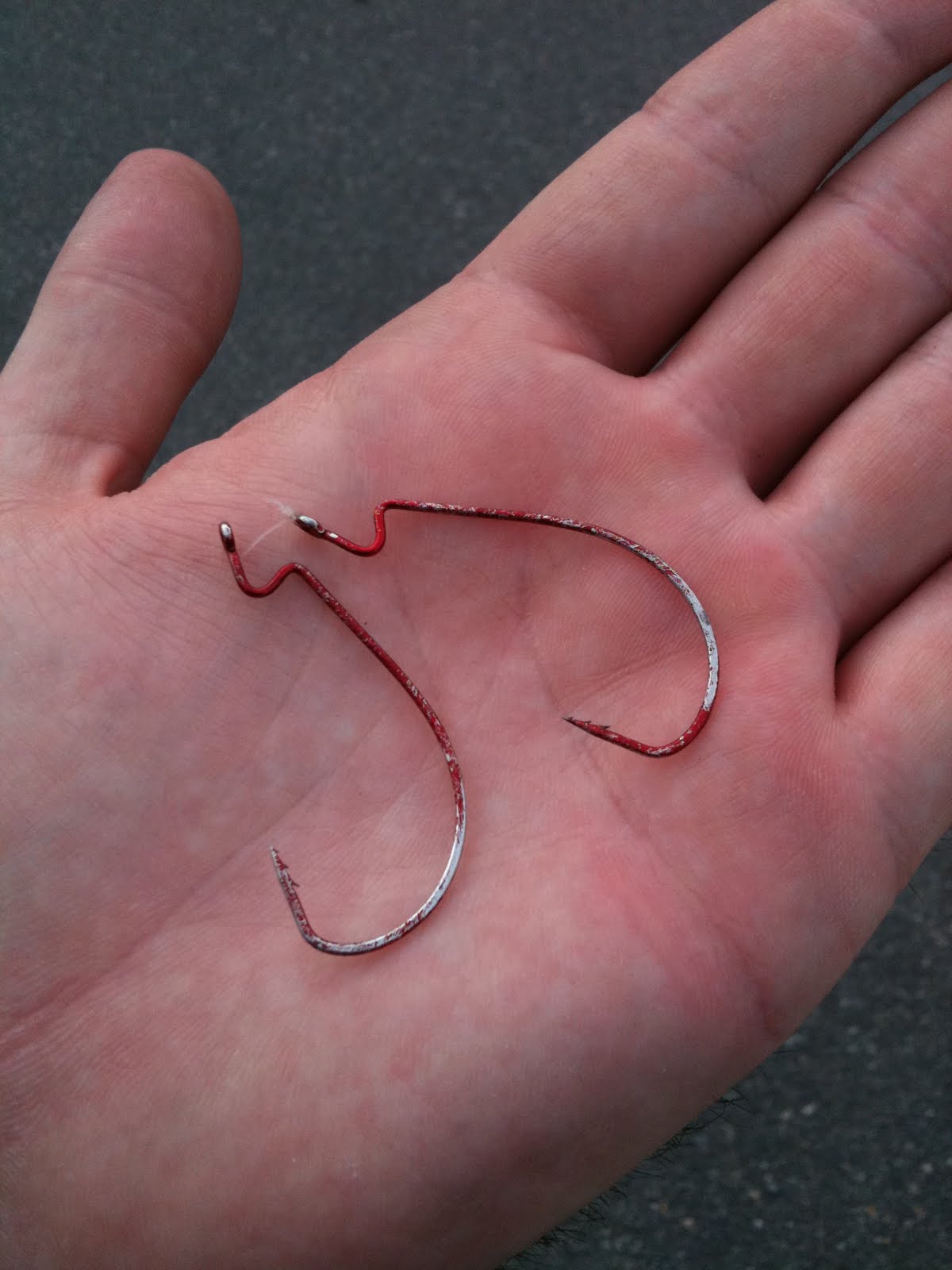
Red EWG worm hooks (size 3/0).  The fish hit so hard and frequently they stripped the red paint off the hooks.
My brother catching the first fish of the trip.
My first catch of the trip.  Notice the jealous look coming from my brother.
Boom!  This guy fought for 8 minutes and even rammed me underwater.  He was not happy!
My brother with a yellow perch.
My school buddy 'The General' showing off one of his many fish.  
The General's brother Zack.  He had a great trip but learned quickly to wear a hat when you spend 8+ hours a day on the water!
Captain Kenny showing off.  He caught the monster 10lb bass and discovered the awesome fishing spot across the lake.
My brother tearing up the yellow perch.  Lots of fish in those grass beds.
Timberline Ski Resort in the background.

Wednesday, May 11, 2011

Lennon might be the Walrus...but I am the Lizard!

Every fisherman has a go-to lure in their arsenal that they use more than any other.  Some guys swear by spinner baits, others rely on Slug-o's, and others say crankbaits take care of a days work.  I am no different as I have had a 'go-to' for almost 20 years that has proven time and again to work.  For me, the four inch Zoom mini lizard is a hands down bass slay'n machine that has bagged more fish than I care to count.  Below is a quick over view of how I fish them,  maybe they'll become your new go-to buddy.

This bad boy was caught on a Watermelon Seed colored 4" mini-lizard.
The Zoom Bait Company is based out of Georgia and has been in the fishing business for over thirty years.  I first discovered them with a high school buddy back in the early 90's.  Back then you could only find them in small 'mom and pop' shops.  Now, you'll find Zoom soft plastic lures all over the U.S. from gas stations to large retailers like Bass Pro and Wallmart.  They also make a wide variety of other soft plastic worms and bait fish for fresh and salt water. 

Zoom lizards come in four sizes; 4" mini-lizard, 5" lizard, 6" lizard and the big-boy 8" magnum-lizard.  Although all of their products are good, in my opinion nothing has out-fished the four inch mini-lizard.  Most of their soft plastic baits are made with very durable plastics that prolong the life of the lure.  They are also impregnated with salt which add to the fish attraction.  It can be used in lakes, farm ponds and rivers with deadly results.  It also works with multiple fish species as I've caught large mouth bass, small mouth bass, crappie, panfish and even had a tiger muskie chomp at this thing.  I am no biologist but I do know that lizards typically eat fish eggs so fish have an inherent hatred for all types of lizards.  Its a natural instinct to strike at these guys, even more so during spawning season.  I have seen bass no bigger than the lizard attack these guys with relish and when fish hit these lures they hit them hard. 

I have fished them in numerous configurations from Texas rigs to Carolina rigs but I find having no weight on the lure gives the best results.  This can limit casting distance but with 6lb mono and a standard light action spinning rod and reel combo I seem to do just fine.  I always use off-set hooks so the lizard presentation is streamlined.  You can also tuck the hook point into the back of the lizard to make weedless (see below).
The right way to rig.  My brother swears by the red hook with this color type - makes it look like the lizard is wounded and bleeding.  
Be careful not to place the hook shank too close or too far from the body when rigging.  If so you'll bunch up the lure (see below).  This will adversely affect the swimming action of the lure and make an unnatural presentation which will spook fish.
What you want to avoid.
The colors I use mostly are Junebug, Chartreuse Pepper & Watermelon Seed (see below).  I use Watermelon Seed mostly in the early spring as well as really clear water.  Chartreuse Pepper is used during the summer months or when going deeper in the water column.  Junebug is used on really sunny days when fishing high in the water column.  When you cast them out, I tend to let it sink (count to ten) then retrieve a few feet and stop, give it a few seconds then start your retrieve and stop.  This makes the lure swim a bit and sink, swim and sink.  More often than not the fish strike when the lure is sinking back down in the water column.  

The colors I use most, aka "The Holy Trinity."  From L to R: Junebug, Chartreuse Pepper & Watermelon Seed.  The hooks to the right are the four I use most depending on water/ weed conditions.

Below are some pics from a recent day trip this spring at three different 'honey holes' in Northern VA.  Total I landed about twenty fish in five hours... at least another ten spit the hook out during the fight.  I also used a fish attractant spray to help "sweeten" the bait.  Usually a garlic flavored spray which can be purchased at any sporing goods store will help get picky fish to bite.

Early spring Virginia large mouth bass.
This guy is no bigger than the lure and he hit it HARD.
This guy was the smallest of the day but fought very hard.
Getting bigger!
Nice size black crappie.
Another crappie - I had these guys dead to rights with a Chartreuse Pepper lizard.
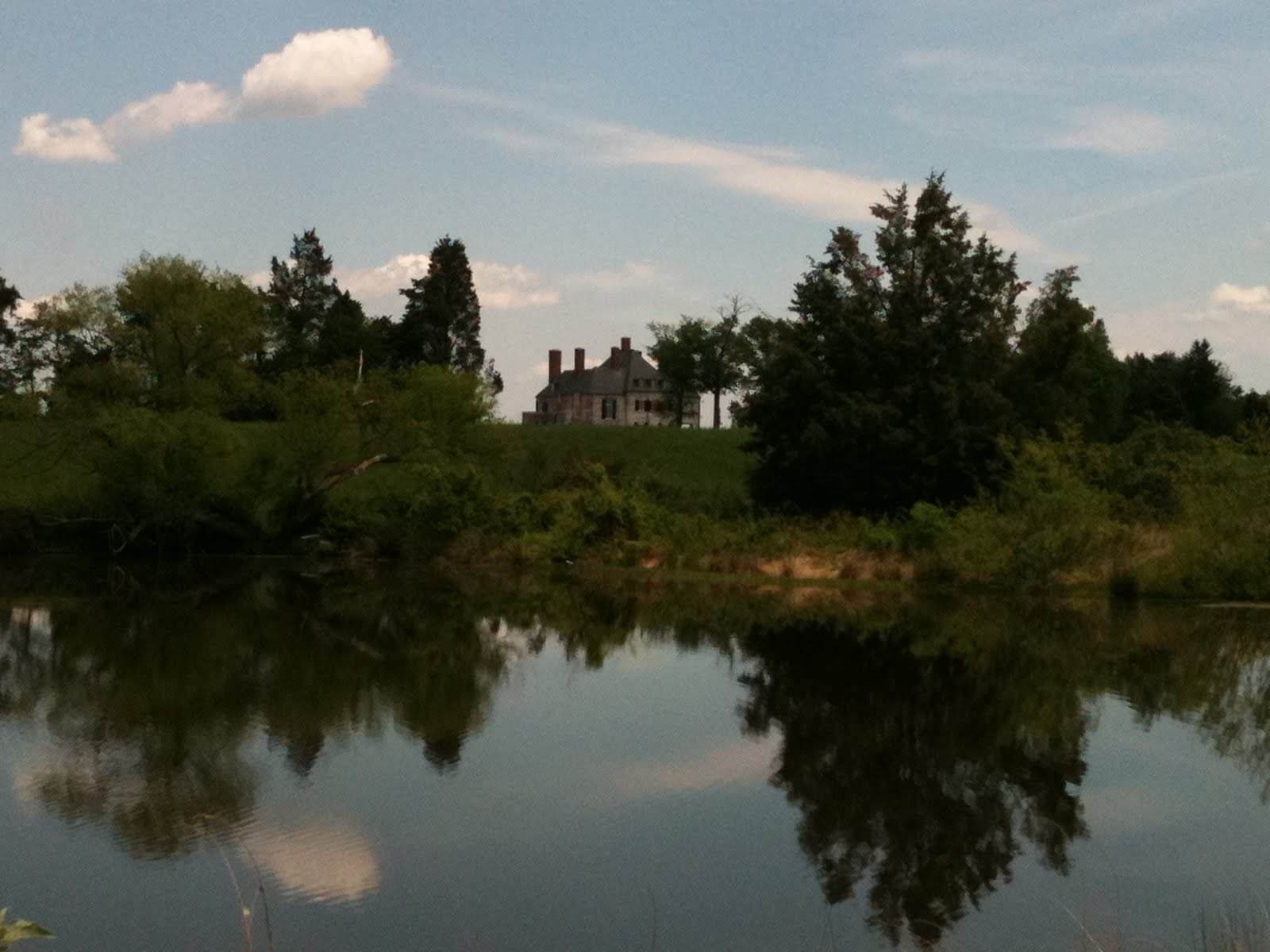
An old abandoned VA manor just off one of my local fishing holes.  Its rumored that Howard Hughes bought that place back in the 60's.
Local fishing buddy.  This guy was slamming the fish all day.
Spring time in Virginia.

Tuesday, May 3, 2011

Don't mess with Texas!!!


Last week my family and I flew out to Monohans, Texas to visit my grandfather.    Monohans lies in the West Texas pan handle in the middle of oil country USA.  At one time this area was the heart of petroleum and natural gas production for the country and was dotted with several small yet vibrant towns.   There was the Rattlesnake Bomber Base built during WWII that was a training facility for B17 and B29 air crews and even hosted the Enola Gay for a short time before its deployment to the Pacific theater.  This area of the country has a rich history with friendly and affable people but since the introduction of the Interstate highway system and the decline in domestic oil exploration over the last twenty years this area has fallen on hard times.

As for the climate its hot, dusty and smelly as all of the old natural gas wells still emit sulphur fumes. Its 90 degrees most of the year and can reach well over 110 during the summer - winters can can be cold but they are short lived.  Aside from being in 'tornado alley' there are dozens of poisonous snakes, venomous scorpions, tarantulas and several species of invasive 'fire ants.'  Even the lawn grass here is tough as they contain hundreds of sharp nettles that seem to find a way into your shoes and boots no matter how careful you are (forget about flip flops... HUGE mistake).

Despite all this West Texas boasts a natural beauty with a diverse and abundant wildlife.  Drive five minutes outside of any town and it feels like a Western movie.  The night sky is so clear you can see the Milky Way with your naked eye and even track satellites orbiting the Earth.  There is a diverse amount of wildlife (the non poisonous kind) that includes; mule deer, turkey, bobcat, coyotes, foxes, rabbits, pronghorn antelope, javelina (wild boar) and mountain goats.  With this in mind we determined to try and hike, explore and fish this area during some down time from visiting family. 

First stop: Sandhills State Park
Located just outside the town of Monohans in Ward County this park consists of over 3,840 acres of sand dunes, some reaching over 70 feet high.  The park is a draw for hikers, family picnics and the occasional camper.  There is an entrance fee of $3.00 per person but its worth a stop.  There is not a lot of blazed hiking trails here but there are a lot of dunes to explore.  Make sure to bring LOTS of water and sunscreen and watch our for snakes - lots of them in this area.

The Monohans Sandhills State Park
The hike up this 40 footer started nice then we crested the top and saw the rest of the park... all 3000+ acres of HOT sand. It was like walking on a mirror... not cool for two pale Yankees.
I ran up to the top of this one.  I am pretty sure I lost 10 lbs and permanently damaged my lungs.   
Shade is your friend.... sand is the enemy!

Next stop: Balmoreah, Texas
The town of Balmoreah sits on the edge of the Davis Mountains north of Big Bend State Park.  It resides over the San Solomon spring which has been providing fresh water to local inhabitants of this area for centuries including Apache Indians and Union Calvary troops.  The population is less than 700 and there is just one gas station/ restaurant/ bar in the area but the folks are nice and the local scenery is pretty.  The natural spring runs right through the middle of town and feeds one of the neater state parks in the state, the Balmoreah pool

A desert oasis... the pool consists of 100% natural spring water which does not require chlorine.  Because of this there are millions of little fish (and some large catfish) in it.  It is 'L' shaped with shallow and deep ends.  In the bend of the pool is a 30 foot deep, 300 foot diameter dive area where you can scuba dive.  They even hold classes and night dives.
Some Balmoreah residents (yes - they are wild).  The one on the far right is the alpha and has a huge beard and leg spurs. This is a rarity for birds like this - probably some local is feeding them.
Local eatery in downtown.  Is 'Snackateria' even a word?
The spring also feeds Lake Balmoreah which is the only bass fishing pond in the area.  After a quick stop at Walmart in Midland (the largest town in West Texas and former home to President George Bush) for rods and tackle my father, brother and I ventured out to give it a shot.    The lake is about 556 acres and is hallow and very clear.  It is stocked with large mouth bass and pan fish but also has a variety of cat fish, grass carp and stripped bass.  Since it is the only fishing spot for 800+ miles it gets heavy pressure and is also used by local cattle ranches so the banks are heavy with trash and cow pies.  Not the most picturesque lake but beggars can't be choosers!  Just be advised, the fishing is shoulder to shoulder and most of the locals cook what the catch so if your looking for calm and serene catch and release fishing this is not for you.

First stop - the pro shop to buy permits.  Lots of rules on this lake!

The 'Old Man' fishing in style.

My kid brother trying to be the man.  You can see the Davis Mountains in the background
and the smoke from several wild fires.
The bait... crawfish.  Some local caught a beast of a bas a few days before using these.
A small guy to be sure but at least I didn't get skunked (or fall into the water) like my brother.
Last stop:  Davis Mountains and Fort Davis
This is one of the more interesting stops and a big draw for this area.  The mountains are small compared to other ranges but the desert setting makes them absolutely beautiful and very unique.  A little bit of trivia, the movies "No Country for Old Men" and "There Will be Blood" where filmed in these mountains.  The drive to Fort Davis from Balmoreah is awesome - you totally feel like Billy the Kid will be around the next bend.  The Davis Mountains have A LOT of hiking areas and camp grounds including an Indian Lodge built in the 1930's by the CCC, the MacDonald observatory and Old Fort Davis.  The Fort is one of the last remaining frontier forts and is a great stop to stretch the legs and walk around.
How many rattlers do you think call that ridge home?
Its like a screen saver.
The Limpia Hotel in the town of Fort Davis.  I stayed here with the family about 15 years ago.
The parade ground at the fort.  This fort housed African American Cavalrymen which the Apache called 'buffalo soldiers.'
For Davis enlisted mens' barracks.  

The CO's house and the one tree in West Texas over 20 feet tall.
Some graffiti scratched in one of the abandoned officer's quarters. TW & Debbie signed their art in 1957.  There is one to the left from some lonely LT in 1868.
View from the MacDonald observatory. You can see the wild fires off in the distance.  Every 5 to 7 years this area gets a mean dry spell and suffers from wild fires.  This year's fires were pretty bad but the town and the observatory were spared.
Me playing a game of "no hair."  That is about an 80 foot drop off that ledge, then another 600 feet.