Thursday, March 29, 2012

Springtime Shad

Fletcher's Cove
Washington DC

Springtime in the DC area means cherry blossoms, flash rain storms, and the beginning of tourist season.  For the outdoorsy it also means shad spawning in the Potomac.  Probably one of the best kept local secrets is the AMAZING shad fishing that hits the Potomac River every spring.  There are three types of shad that spawn in the Potomac river; Amercian shad, gizzard shad and hickory shad.  They are a protected species in the Potomac watershed with tight restrictions on creel limits but they are awesome to catch.  On a fly rod they are nicknamed 'freshwater tarpon' for their ability to fight and leap out of the water.

Hickory shad caught on a 9 wt fly rod using a chartreuse Clouser minnow and shad fly trailer.
One of the best spots on the Potomac to target these fish is near Fletcher's Cove Boathouse.  Aside from the fleet of rowboats that are for rent there are plenty of spots on the shore that allow anglers access to this norrow portion of the Potomac to target the spawning shad.  The challenge with shad fishing is many.  Water flow, sunlight and water clarity all play major factors.  Ideally you want overcast skies and low water so you can access the running shad who hold bottom of the river.  The payoff, aside from the great fight is that there are a variety of other fish attracted to the spawn that are just as fun to catch; namely stripped bass, catfish and snakeheads.

Fletcher's Cove Boathouse: right off the Potomac River, 1 mile from work and a 10 minute drive from the White House.  (Photo courtesy of Google Maps)
The shad run lasts about 3-4 weeks.  If the weather is right it can last a bit longer.  One of the issues of the Potomac is that right around the time of the year of the spawn this are receives a lot of rain which can put the kibosh on fishing.  The area around Fletchers is greatly affected as the rather large Potomac river passes through a very narrow gorge (some areas around 150 feet wide) so the water flow at times can be massive.  Add flotsam from upstream and the rough uneven bottom makes trying to hold anchor in a boat or fly fish the depths from shore all but impossible.
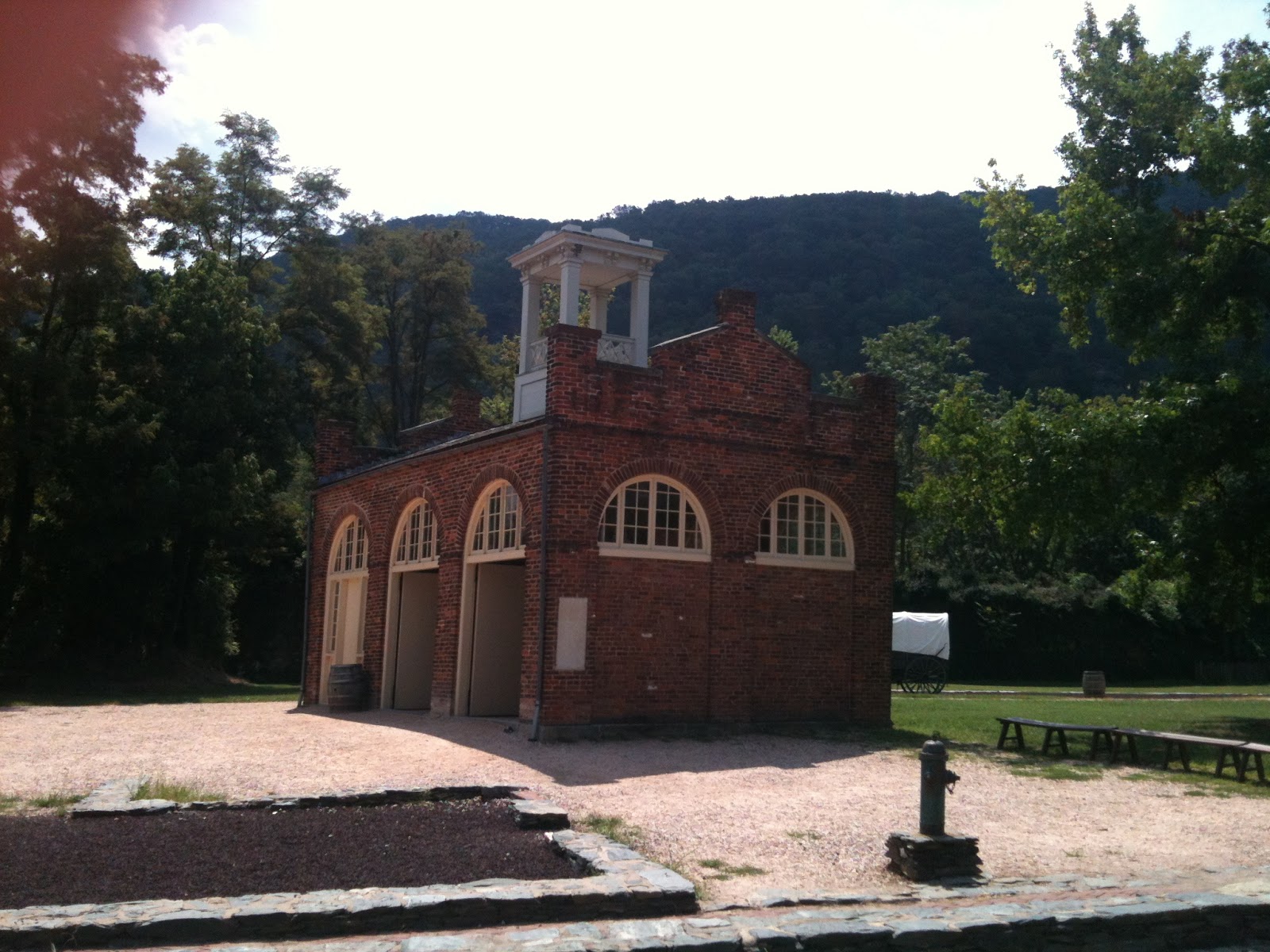
View of Abner Cloud House off of Canal Road which marks the entrance to Fletcher's Cove.  The upper parking lot is to the left of the house.  In the foreground is the C&O Canal and bike path.
Downstream view of the C&O Canal.  If you follow this it will take you to Georgetown and Washington DC.  To my left is the Abner House and upper parking lot.  To my right is the lower parking lot, Fletcher's Boat House and the Potomac River.
The Boat Rental, tackle shop and Bike rental buildings.  You can purchase a DC fishing license here for $13.00
View of the cove and boat launch.  During dry spells and low tide that area is one giant mud pit.
For fly fishing, just about any weight fly rod will do.  Shad flies are typically small with lots of color.  Gold hooks and eyes work well.  The challenge is that you need a sinking tip line and some extra weight as you need to get bottom quickly where most of the fish are at.  I typically use two rods.  I use a 5 wt rod with sinking, weight forward line with a variety of shad flies.  I also carry the big gun 9wt salt rod that I rig with a Clouser minnow and shad fly trailer.   What's interesting about shad is that their hankering for flies changes daily.  Once day they'll only hit pink flies, other days its white.  It varies literally from day to day.  When they hit a fly its not out of a desire to eat - you are just triggering their aggression and curiosity so you're really not trying to imitate anything natural or 'matching the hatch.'
Variety of shad flies I use.  Most of the local fly shops in the area carry all of the above; others you can purchase on site at Fletcher's Boat House.
As for casting from the shore - its tough.  There is a lot of vegetation and overhanging trees. This is why low water levels are best as you can scramble onto boulders along the shoreline and get farther out to the river.  If you can manage a good roll cast you'll have an advantage.  Usually I cast out and let the fly sink and float down-stream.  Right when it can't go any further in the swing I retrieve using quick and erratic motions.  No need for indicators because when a Shad hits fly you'll absolutely know it.
Trail that tracks upstream, north of the boathouse.  This will take you to several great spots along the Eastern bank where you can cast from shore.
Hard to believe you're in the city.
Lots of wild flowers along the river and path.
Here you can see the low water levels and exposed rocks.  Gives you a little more room for back casts.
Downstream view from one of my secret spots.  Notice the cloud cover - this is ideal for good fishing as bright sunlight slows down the bite.
Caught this guy on the 9wt using a double rig.  Notice the Clouser above the shad.  I use this when I see snakeheads tearing up the water.  You never know!
Bring a hand towel as these guys are slimy and smelly.
This fishery is amazing and lots of fun.  There is a boat launch if you bring your own canoe or kayak or you can rent a row boat from Fletcher's.  Make sure to snag a few small rocks to use as make-shift anchors as holding bottom is key to successfully fishing this area of swift water.  Do not use store-bought anchors as they will be guaranteed to get wedged in the rough bottom causing you to cut off and loose $$$.  Be careful and DO NOT wade this area of the river as the current is very swift.  I would also not bring children here to fish from the shore (boats are OK).  The current is super strong and there is a lot of underwater structure that can trap people who fall into the river.  If you use a boat, absolutely wear a life preserver.

Directions can be found here.  Make sure to read carefully about Canal Road as it turns into a one way street for the morning and evening commutes.  GOOD LUCK!

Sunday, February 5, 2012

Passage Creek Expedition

Its been two years since I wet a fly line... crazy work schedule + wife and two little kids will do that to an avid outdoorsman.  One of my New Year's resolutions was to go out and fish new water, both fresh and salt.  Hence my first outing to Passage Creek on a very warm January day.
Sign greeting anglers at the Mountain Road (State Route 619) bridge that bisects the special regulation area of Passage Creek.
Where to begin with this.  First... the facts.  Passage Creek, the 1-mile stretch known as the Special Regulation area, is a slate rock bottom creek stocked and managed by the VDGIF in cooperation with Trout Unlimited.  In total Passage Creek runs 38 miles and is a tributary of the North Fork of the Shenandoah River.  The special regulation area I fished is a mile long strech located parallel to the Front Royal Fish Cultural Station.
A short hour-long drive from the Washington, DC metro region.
(Map provided by Google Maps)
The Front Royal Fish Cultural Station is classified as a state run warm water hatchery used primarily for walleye and bass.  It is also utilized as a distribution point for a number of fish fingerlings deposited throughout Northern Virginia.

A map reference of the special regulation area near the Front Royal Fish Cultural Station.
 (Maps provided by Google Maps)

Fingerling channels on the north east side of the property.  You can see the station house in the background.

In short this creek sucks for fly fishing.  Its pretty with very accessible water and lots of runs and small pools but it is poached big time.   The VDGIF stocks this water five times a year, usually before three-day holiday weekends.  This brings out everyone with a cooler of Busch light and tackle boxes full of power bait and trout magnets.  I have nothing against these anglers as we are all brothers in the outdoors.  I just get pissed when said fisherman venture over to the managed fly fishing side and poach that water too.  I've heard rumors that VDGIF rangers are indifferent to the poaching as it is too much trouble to police a location so close to civilization.  I guess its also true that all politics are local.

View south (upstream) from bridge parking and put-in point.  Its pretty with good water flow but its poached over.
View north (downstream) from bridge and put-in point.  I am told that next to that hatchery overflow pipe is a favorite spot of the Busch light crowd as it has nice ledge-seating overlooking one of the deepest pools that the trout hid.... I mean hang out at.
What makes matters worse is that this is the first "natural" trout water in VA for suburban commandos like me.  Every lover with a TU membership and fly rod swings by this creek to wet a line while driving along Route 66.  This means that it is often crowded and over-fished. If you are serious fly fisher-person its better to keep on trucking and drive another 40 minutes into the Shenandoah valley where you can find 20+ trout hotspots.

The start of the special regulation area (upstream).  Its a pretty spot with promising runs but due to the overfishing if you do anything other than birdwatching its a waste of effort.
This stream has good water flow with little to no submerged vegetation.  The stream banks make an easy wade but around the bridge (on both side) are thorn bushes that can make casting tough.  A good roll cast is needed for this water but its not too wide so it should be manageable - even in the warmer months.

Shallows just past the falls (down stream).  As you can see the water clarity is very clear.

I am not sure if this is slate or shale but its all over this creek and can make spotting fish even more difficult.  Its also slippery as hell so make sure you have your ninja wading boots on or you'll be on your ass in no time.

Some of the flies I used.  I mostly tried bead head nymphs in the pools and then tried the CK Kreelex on the right in some of the runs. 
The Kreelex is a bad mofo as far as streamers go.  It was designed by the fly tying guru Chuck Kraft.  I first used them fishing the Pisgah National Forest near Asheville, NC a few years back.  If you are interested in learning how to tie check out the Mossy Creek You Tube channel.

There is posted land at the end of the special regulation area (North end) so be careful not to trespass as it is patrolled heavily.  VA is going through some serious court battles regarding fishing and trespassing so its better to leave well enough alone when you see signs like this.  Plus...I think this guy is serious as there were 8 other trees posted like this along his property!
Getting there: the directions to the special regulation are very easy.  From Northern VA take Route 66 West towards Front Royal.  Exit onto Route 340 South headed towards Front Royal.  Turn right onto Route 55 West towards Strasburg.  Less than a mile after crossing Passage Creek on Route 55 (there will be a sign) turn left onto Route 678 (Fort Valley Road).  Turn left onto Route 619 (Mountain Road) - easy to spot as you'll see a sign for the fish cultural station.  Park on either side of the bridge that crosses the Passage Creek special regulation area.  you can fish either side of the bridge (both banks) for about a half mile in both directions.

Tuesday, December 27, 2011

Morning Hike - Seneca Tract, Potomac Heritage National Scenic Trail

In late November I had three hours to kill one saturday and decided to test out some new hiking gear and enjoy the Fall leaves before the Winter weather rolled in.  About a 20 minute drive from the house is a trail head (Seneca Tract) for the Potomac River Heritage National Scenic Trail.  This tract borders some BIG houses in Great Falls, VA.  It is an easy hike to be sure with little bits of elevation changes here and there and is used by a lot of folks - especially on weekends.  Dog owners love it as there is a lot of areas for pets to roam and not get in trouble with wildlife or deadfalls.  It is also a favorite with several horse owners for the trail is well maintained with little to no underbrush and firm trail footing.

Once you get past the Seneca Tract area and get on the Heritage Trail it gets a bit more rugged as the trail is now at the mercy of the Potomac River flood plain.  This portion has a lot of fun little areas with little bits of the old canal system that George Washington tried to create shortly before his death in the late 18th century.  All-in-all a nice little outing and good gear "shake out" for some Spring hiking on the big trails.
Easy walking but pretty scenery.
The area I hiked.  Easy access from the parking lot to the trail - very kid and pet friendly.
Large map of the Potomac Heritage National Scenic Trail.
Trail blazes to help navigation.
Making my way down elevation away from the Seneca Tract towards the Potomac River.
Feeder creek off of the Potomac.  Still saw lots of little fishes in these waters and with the sun out it got over 55 degrees.
Had some fun climbing up this sucker.
Did not see a lot of wildlife this trip but there were signs everywhere.  Looks like some beaver were definitely at work along the trail.
Coffee break.
View from my coffee perch.  This is the Potomac River (what looks like the far bank is actually a large island).  On the other side of the island is the heart of the river which is several hundred yards wide and very swift.
The remnants of Washington's canal system.
Another shot of the canal.
A plaque off the trail showing Washington's canal as it looked in the 1800's.

Thursday, October 6, 2011

The Old Man and the Sea

Ocean City, Maryland
September 12, 2011

The following photos were taken of my father and I fishing early one morning during our family beach trip to Ocean City.  Normally we cast live bait into the surf using various rigs but we heard that due to the recent hurricanes plaguing the Atlantic we might have some luck with blitzing Bluefish in the surf.
Dawn breaks in Ocean City, MD
A "blitz" is when predator fish ball up a pod of baitfish and gorge on the biomass.  Bluefish tend to travel in large schools along the coast following vast schools of Finger Mullet.  When the moving mass of Blue Fish surround and ball up the mullet biomass they then attack it and feed - almost in a frenzied state.  A tell-tale sign of a bait ball is when you see a lot of birds on the water diving and gorging the unlucky fish on top of the bait biomass.  This scenario tends to happen at sun up and sun down - morning like September 12th.
Dad using a department store standard Shakespeare Ugly Stick bass rod with 10lb mono and a silver Gotcha Plug.
First Fish of the trip.  It was a smalley but at least he did not get skunked.
The Old Man back at it.  In New York and New Jersey, where Fall blitzes are legendary, fisherman will go as far as donning wet suits to get out farther in the crashing surf to get longer casts for the big boys.
Dad with a Striped Bass.  This one is a baby, in about a month you'll see Stripers in these same waters that are in the 40lb class that are as long as Dad's leg.
My turn.  Caught a few this size on Gotchas and Atom plugs.  They are small but fun to catch with light tackle.
View of a small "chopper" Blue and the type of Gotcha lure that worked best for us.
The three lures that produced in the surf.  L to R: Silver Gotcha, Spotted Gotcha and Atoms top water plug.
After taking a break and getting breakfast, hanging out with the family and spending a little beach time with the kids we were back at it in the evening with the big guns and live bait... but I'll save that for another entry.

Sunday, September 25, 2011

In Gary I Trust

One of my first casts using a Yamamoto Senko worm.
I have written on here about a few “go-to” lures such as Zoom lizards and Zoom brush hogs.  Both are great lures that have worked very well for me in a variety of local watering holes, farm ponds and rivers.  I stand by my past entries praising them and still have them in my tackle box.  That being said… I have not used either in 2 months and it all started with a little stream magic and a local named Hank.


I still cannot remember his exact name (I am horrible at that) so I’ll call him ‘Hank.’  I was fishing a local hot spot; a medium sized drainage pond in a local Home Depot shopping center and was having no luck with the fish.  After about an hour’s worth of work with only a little nibble I started thinking about bugging out to grab a beer and enjoy the rest of the short weekend.  Before I could turn around and step out of the lake (I was wadding about ten feet from the bank) I noticed someone walking down from the parking lot towards me.

Hank seemed like any other average Joe armed with a spinning rod except he did not have a tackle box with him.  Aside from his keys all he had was a bag of worms sticking out of his pocket.  "OK I thought - this guy just hit the local sporting goods store and got roped into buying a $10 bag of super worms.  Better steer clear as he'll be asking me in about five minutes about all of the tackle I have in my bag and what works." After saying brief hellos Hank made a left and setup about 20 feet down the bank from me fishing right in front of a storm culvert that fed into the lake.  Now I knew this guy was amateur hour as that area was shallow as hell with zero cover and a lot of floating junk from the recent rain storm.

As I turned around and tried a few more casts before bugging out and giving Hank the lake to himself I heard a loud splash.  OK - Hank got lucky with a smalley I thought.  Yah... I was dead wrong.  He just landed a 5 lb large mouth bass, a monster fish for this suburban drainage lake.  Hank caught me staring as he was freeing the hook, smiled and cast again.  BOOM.... another fish.  This one was smaller but around 3 lbs.  OK I thought, no way he can get a hat trick....BOOM.  This guy caught three fish, all over 3 lbs on three casts in an area I covered previously and never caught jack shit.

I couldn't help it - I HAD TO KNOW.  After swallowing my pride I walked over to Hank and asked him what in the world he was using.  This is when I was introduced to Gary Yamamoto... and I haven't fished anything since.

Gary has been a leader in the fishing industry for years.  If you want the full skinny on his incredible story check out his website.  Just Google his name and you'll get thousands of hits including testimonials from fishing pro's how they never compete without his products in the boat.  This guy is the shit and his Senko worm does a day's work.  The 3 inch Senko is what Hank was using the day our paths crossed.  

Back to the story - after talking for about 10 minutes I learned that Hank is a retired pro bass fisherman who now works as a federal contractor.  A few years back on the tour he discovered the Gary Yamamoto Senko worm and he rarley used anything else.  Once he handed me a few plus some of the hooks he used on his particular rig I too agree this lure is the new "go-to" for me.  When fished right it is deadly on fish, all kinds of fish - not just large mouth bass.

Below is a quick timeline of one particular cast when Hank was showing me how he fished the 3" Senko.  According to Hank this particular size and color Senko is THE BEST bass lure for East coast freshwater.  After using it for two months I beleive him.

STEP 1:  Worm selection.  Use the 3" Senko worm in Watermelon Seed (top) or Watermelon Magic (below).  The Watermelon Seed has little black flakes in it while the Watermelon Magic has little black and silver flakes in it.  Both mimic a variety of forage that all fish eat. 

STEP 2: Hook selection.  Hank's recipe calls for a Size 1, G-Lock worm hook from Gamakatsu.  This is the PERFECT size which allows the lure to fall horizontally like wounded prey.  THIS IS KEY!  Do not use anything bigger with the 3" Senko worm.  Believe me - this hook has caught all sizes and its chemically sharpened so be careful with the pointy end as it'll stick real good.
STEP 3: Attach the worm to hook.  I use a Carolina Rig with no weight.  Although you can use split shot weight when casting out from shore I prefer the weightless rig as the worm falls better (a key for fishing this rig).
STEP 4: Presentation.  When presenting a weightless Senko shoot for a zone between the bank and about 10 - 12 feet out (area circled in red above).  It really helps if there is high cover like the trees above as this will help shield the sun and cool the water.  This zone is great.  Above Hank is on his 9th fish in as many casts. 
STEP 4: Presentation (Continued).  When you cast out the worm, as soon as it hits the water have the rod at the 10 o'clock position and let the worm fall naturally (don't work the lure or start the retrieve - just let it fall).  During this initial fall is when a majority of the hits occur.  Having the rod tip at 10 o'clock gives you the best chance to set the hook. 


STEP 4: Presentation (Continued).  After the initial fall if you do not get a strike, gently lift the rod to get the worm off bottom, slowly crank the reel a few turns and let it fall.  Again, you do not want to work the lure, jig it, etc.  It's all about the fall.
Not bad Hank!  He was working fish this size all day - I've never seen anything like it.
Now it was my turn with the Senko.  After catching 12 fish in 40 minutes I ran out of Senko worms and had to bug out.  That is the one draw back to using these guys.  The plastic component they are made out of is super soft which helps the swim/ fall action in the water.  The problem is that fish tear them up really quickly.  When they hit these things they hit hard - I mean really hard.  Its very easy to go through a pack of 10 in a few hours - even more so when you loan a few out to jealous anglers like me.  If you get a chance, get your self a pack with the hooks described above and see for yourself.  I have steered four people to these lures, all with different fishing skill sets and the results have all been the same - outstanding!

After a brief stop by Dicks Sporting Goods on the way home.  I have gone through about 9 of these packs in the last 2 months. To be fair I have loaned out a few to friends and family.
All sizes of fish love these things.  It is a great lure to use when teaching young kids how to bass fish as the chances they'll catch something is almost a given.
Next cast after catching the baby bass.